
Wrangling: the unsung art of stakeholder management
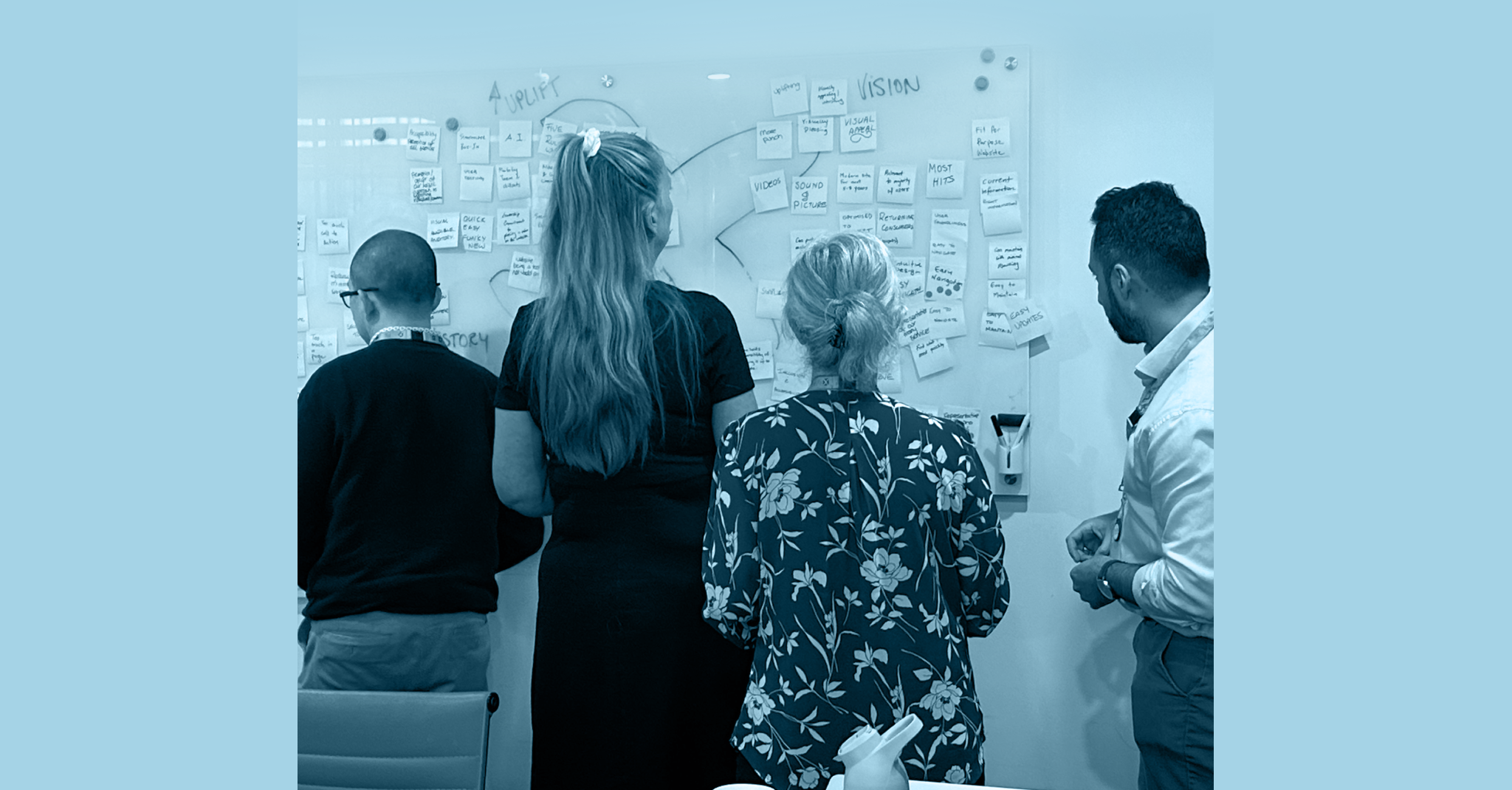
The Cambridge Dictionary defines wrangling as "the activity of taking care of, controlling, or moving animals." If you swap "animals" for "stakeholders", you get a very accurate picture of what human-centred design actually involves.
Wrangling means bringing people together from different parts of an organisation to focus on a shared goal. For many teams, it is one of the few times they get to step out of their daily roles and look at the whole customer journey.
Why wrangling matters
Organisations are complex and design projects can be messy. People are rarely ready to collaborate from day one. Often, they do not know the background or the purpose of the project. Different teams have competing priorities, lack context, or struggle to see why change is needed. Everyone also brings a different level of experience with customer-centric work.
At the same time, your stakeholders are the experts in how the organisation actually works. We need their knowledge in the room. But that knowledge is not handed over easily—we have to go in and find it.
This is where ‘wrangling’ comes in. Our job is to take care of your stakeholders and guide them toward each other. We foster genuine alignment, build digital confidence across your teams, and we spend time getting to know your customer or patient, together.
How we do it well
The most important rule is making people feel heard. The format of our kick off workshop that we use for most projects, can be therapeutic. Team members get to unload past baggage and hear what's been weighing on their colleagues. They realise some frustrations are shared, and that others have context they didn't know existed. Each voice carries equal weight.
We design our sessions around the fact that everyone communicates differently. Not everyone wants to speak up in a crowded room, so we offer multiple ways to contribute—through open discussion, quiet written notes, or direct feedback after the session.
Participants often walk into these meetings bracing for tension or internal politics. As facilitators, we diffuse that friction by keeping everyone’s focus on the work itself—the problem we are all there to solve—so the conversation never becomes personal.
The hardest parts of wrangling
Getting busy people into the same room is hard enough, but keeping them engaged over time is the real test. It is natural for stakeholders to get pulled back into daily operational priorities. We bridge that gap by keeping momentum high and making it easy for your team to stay involved. This steady engagement prevents one of the biggest project risks: absent stakeholders re-emerging at the final hour to challenge decisions made weeks ago
The value of an external partner
When we step in as your external partner, we bring two critical advantages:
Free from internal politics: We do not report to any department head or executive line. Our sole commitment is to the end user, whether that is your customer, your employee, or your patient.
The freedom to ask simple questions: We have permission to ask the foundational questions that internal staff often feel uncomfortable raising.
When a team has done something the same way for years, they stop questioning it. As outsiders, we can question standard practices simply because we are learning how your operations work. Being the team in the room with a fresh perspective is often our greatest asset to you.
Wrangling runs through the whole project
Wrangling is not a single phase we tick off and leave behind. At the start of a project, we align your leadership around vision and purpose: Why are we doing this, and who is it for? Near the end, our focus turns to agreeing on the final solution, the content, the design.
The details will change as you go, but the need to wrangle remains throughout the project.
